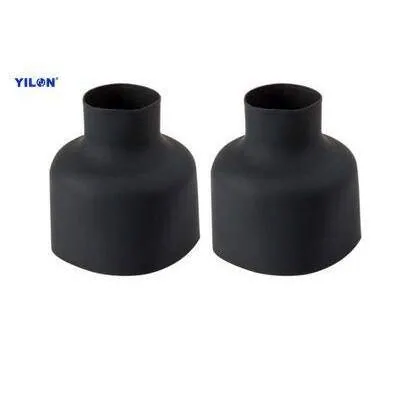
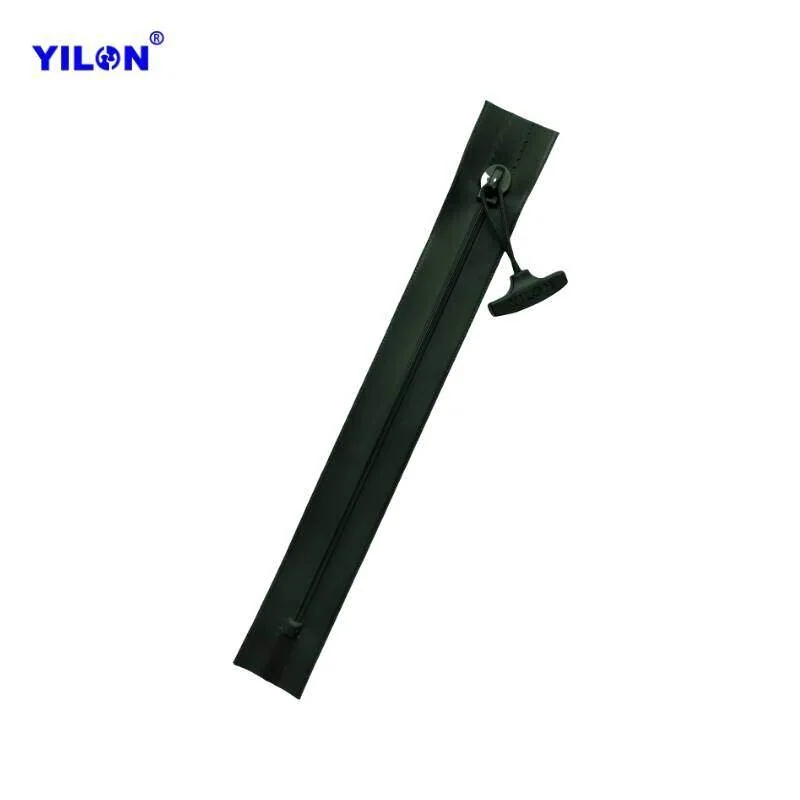
A drysuit envelope is a continuous-immersion closure, not a splash-resistant one. Material choice drives how the seal behaves under pressure, in salt water, and across the thousands of cycles a working drysuit sees.
Material comparison for drysuit closures
| Material | Behaviour | Suited to |
|---|---|---|
| Silicone rubber | Highly flexible, weather-resistant, excellent saltwater resistance | Drysuit envelopes, deep-sea and underwater rescue work |
| TPU | Elasticity, abrasion and hydrolysis resistance, -30 to 70°C | Airtight pressure-sealed assemblies |
| Nylon woven + TPU | Soft and flexible, good watertight performance | Watertight garments where a one-piece TPU build is unnecessary |
Published drysuit envelope specification
| Parameter | Value |
|---|---|
| Size | #5 / #8 |
| Material | Silicone Rubber |
| Waterproof rating | IPX8 |
| Saltwater resistance | Excellent |
| Process | HF welding, bonding |
| Environment | Deep-sea high pressure |
What to test
- Immersion testing to the depth and duration your project requires — IPX8 is defined by agreement, not by a fixed number.
- Open/close cycle testing; the published durability figure across the range is 3,000+ cycles.
- Salt spray testing where the suit will be used in seawater.
- Assembly testing with the finished suit, including the neck and sleeve seals.