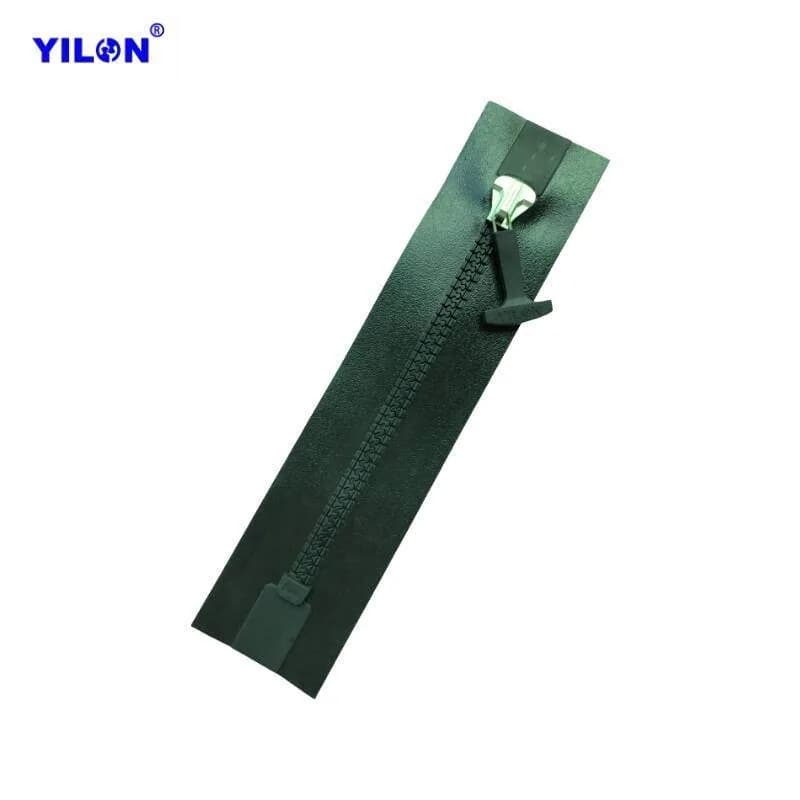
TPU is the manufacturer’s first choice for airtight sealing: it combines elasticity with abrasion and hydrolysis resistance across a -30 to 70°C range, and it can be welded rather than only sewn.
Published assembly processes
| Process | Used on | Notes |
|---|---|---|
| HF welding, sewing/tape, bonding | #10 resin, #5 resin, circular airtight zipper | Full combination available on the resin and circular ranges |
| HF welding, tape, bonding | Self-healing airtight zipper | Sewing is not listed for this product |
| HF welding, sewing | PEVA airtight zipper, high-speed roller door zipper | Simpler two-process route |
| HF welding, bonding | Drysuit envelope zipper | Suited to silicone rubber |
Why high-frequency welding matters
- Welding fuses the zipper tape to the host material instead of perforating it, so the seal is not interrupted by stitch holes.
- It suits TPU and PVC panels — the materials used on dry bags, inflatables and protective coverings.
- Where the host material cannot be welded, sewing followed by seam taping is the published alternative.