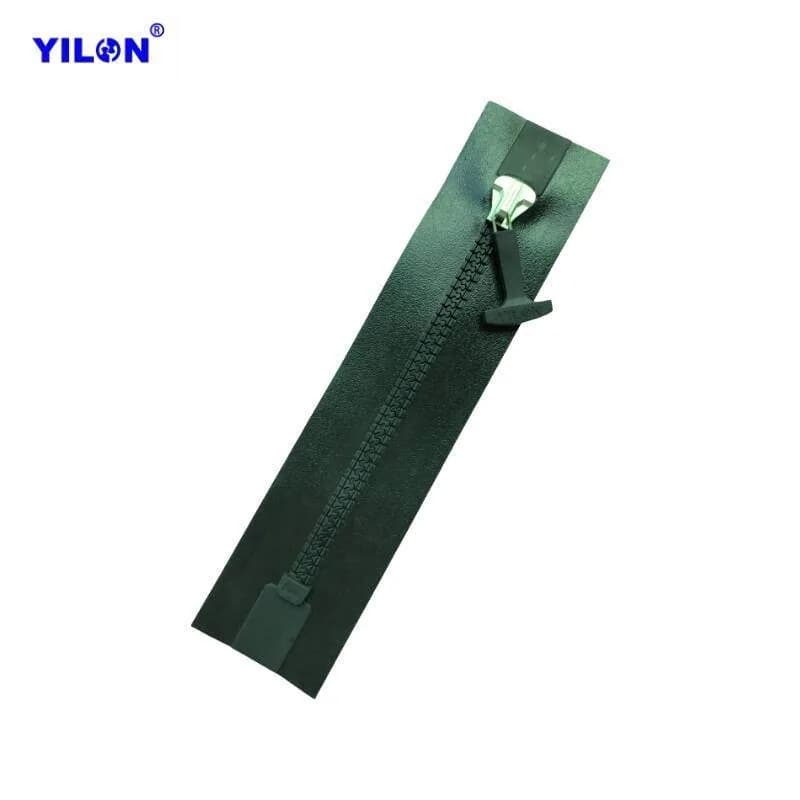
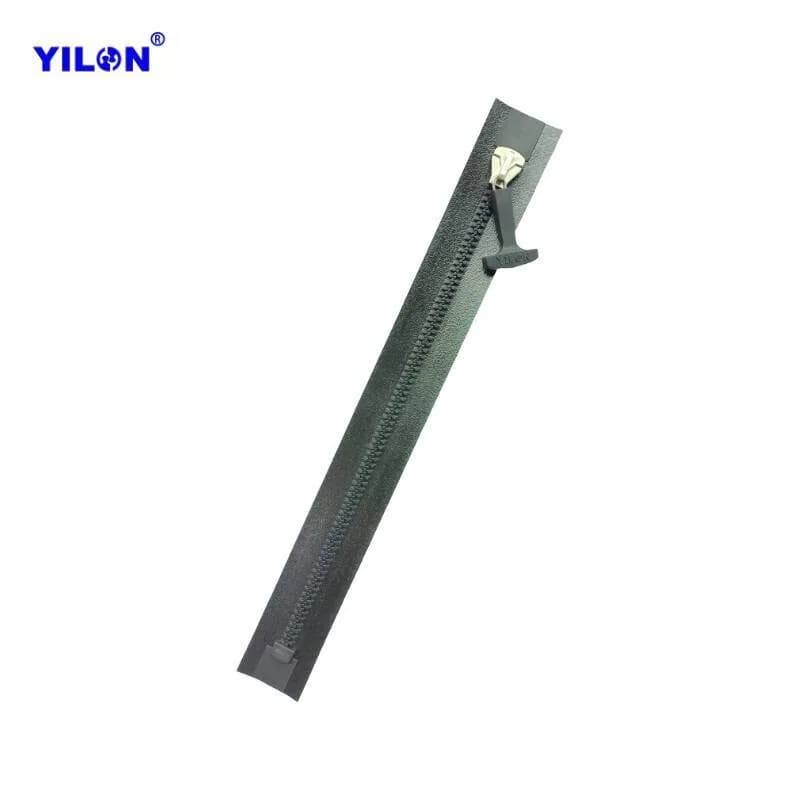
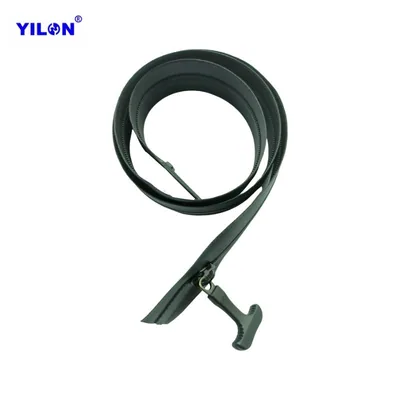
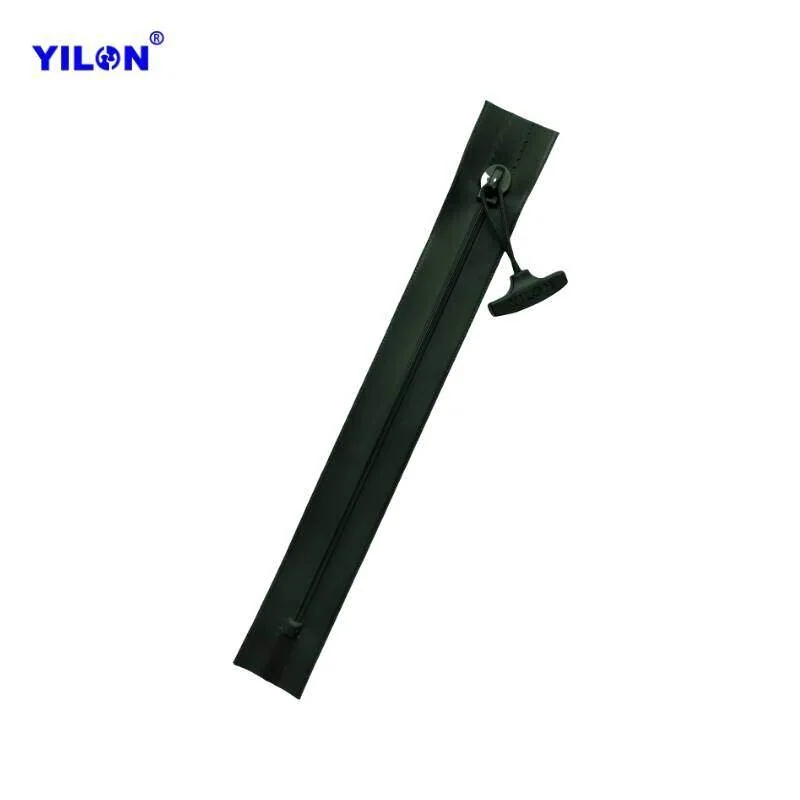
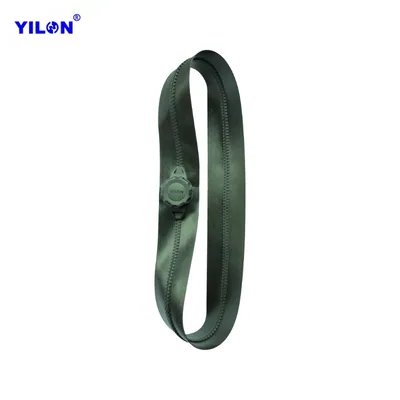
Selection comes down to four things: waterproof rating (IPX6–IPX8), size (#5/#8/#10), material (TPU/PEVA/silicone/nylon), and customisation (length/width/colour/slider). Identify your application first, then match sealing needs from high to low to narrow down the model.
Step 1: Determine the waterproof rating
| Rating | Protection | Typical uses | YILON products |
|---|---|---|---|
| IPX6 | Powerful water jets | Rainwear, dry bags, standard waterproof wear | PEVA / TPU waterproof zippers |
| IPX7 | Temporary immersion (1 m, 30 min) | Wading gear, snorkelling, water sports | #5/#8 TPU watertight zippers |
| IPX8 | Continuous immersion (>1 m, by agreement) | Drysuits, deep-sea workwear, military/medical pressure sealing | #8/#10 TPU airtight zippers |
Step 2: Choose the size
| Size | Approx. chain width | Applications |
|---|---|---|
| #5 | ~5 mm | Lightweight garments, dry bags, general outdoor gear |
| #8 | ~8 mm | Protective suits, drysuits, inflatable products |
| #10 | ~10 mm | Heavy industry, military, rapid roller doors, high-pressure sealing |
Step 3: Choose the material
- TPU: best all-round performance — elasticity, abrasion and hydrolysis resistance, -30 to 70°C range, first choice for airtight sealing.
- PEVA: lightweight and low-cost, for everyday waterproofing.
- Silicone rubber: highly flexible and weather-resistant, used for drysuit envelopes.
- Nylon: soft, good for watertight uses, but less effective than one-piece TPU for high-pressure airtight sealing.
Step 4: Confirm the 12 customisation parameters
Application, length range, opening length, size/tape width, colour, slider style, end structure, material, waterproof rating, oil-resistance requirement, test conditions, and quantity.